

“Autojuta” CEO Rasa Sinkevičienė: FEM trains your thinking, not gives you job instructions
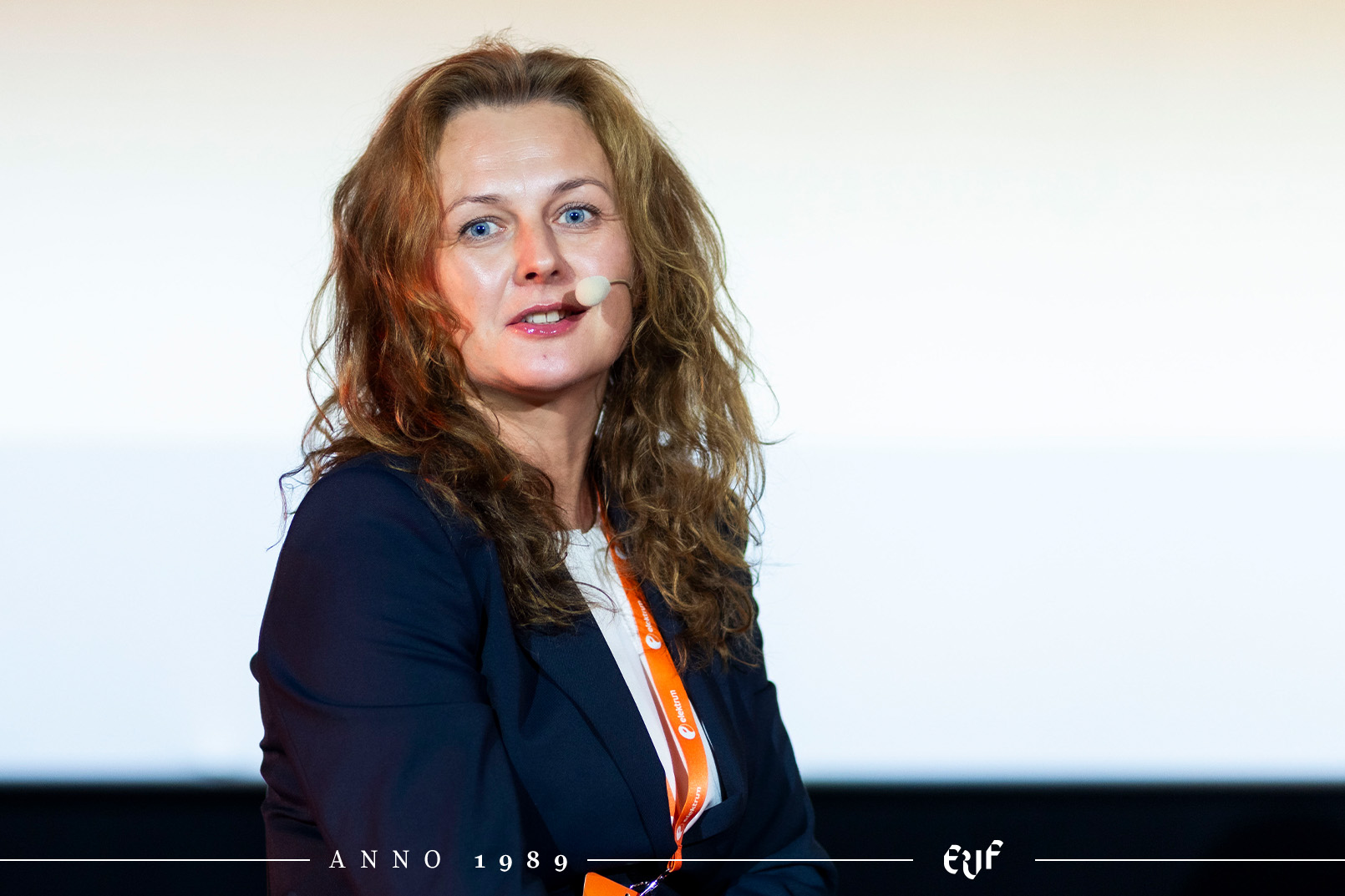
“Studies are not an instruction manual for life. They’re more like training for your thinking,” says Rasa Sinkevičienė, CEO of “Autojuta” and an alumna of Vytautas Magnus University’s Faculty of Economics and Management (FEM).
She entered VMU without a very specific plan, but today she describes that stage as one of the most important investments in herself. In her view, studies don’t help you “get a position” — they help you build a foundation: learn how to think, structure information, understand the world and yourself better, and then shape your own direction.
This conversation is about FEM studies as a way of developing thinking, about getting involved beyond the classroom, and about why a career is not a title, but what you do with genuine motivation.
FEM studies: training for your thinking, not instructions for a job
Sinkevičienė remembers coming to VMU without clear expectations. “I did well at school, so I had more than one option. At the time, the most popular choices were medicine, law, and economics. I couldn’t even consider medicine because I was afraid of blood, law seemed boring, and economics was a completely new field. So I decided to give it a try,” she recalls.
According to her, it’s perfectly normal to start studies without knowing exactly where they will lead. What matters is that, over time, you gain a deeper understanding of what a university truly gives. “My studies were very interesting and gave me a lot,” she says, stressing that their value often becomes clear only later.
She is straightforward: studies don’t make you a “ready employee” from day one. They shape your way of thinking, broaden your worldview, and develop the ability to organize information and make decisions. And how much you take from them depends greatly on your own engagement. “Nothing comes without work. Even geniuses work extremely hard to achieve something,” says Sinkevičienė.
Value is also created outside the classroom
Speaking about her student years, Rasa highlights what happens alongside lectures: activities, projects, organizations, and volunteering. In her view, that is where real growth often happens — when you take responsibility, deal with real issues, and learn to work with people.
“Volunteering says a lot about a person. When someone does work that nobody pays for, they reveal their best side — how they work, what their values are, what their character is like,” she says. Such experiences, she adds, not only strengthen you personally but also help you build relationships that last.
Sinkevičienė is glad that some of the connections and sense of community from her student years have continued to this day — she stays in touch with former classmates and like-minded people, and in some cases they work together or collaborate. For her, that is one of those quiet but powerful “returns” of university studies.
A minor and a wider perspective: business + psychology
During her studies, Rasa used the opportunity offered by VMU to choose a minor — alongside business she also studied psychology. “At first glance it may seem unrelated, but in reality both business and psychology are about people,” she says, emphasizing that better self-understanding automatically improves your ability to understand others.
She is convinced that combining different fields helps you see more broadly, which is especially important today, when professions and market needs are changing rapidly. In her view, a broad perspective and curiosity are not a “bonus” — they are becoming a necessity.
Rasa remembers the university as a space to try as much as possible — not to lock yourself into one narrow box, but to test what works, what interests you, what fits. “When you’re curious, everything is interesting,” she smiles, adding that investing in yourself works simply: the more you take from your studies, the more you gain.
A real career is doing what you enjoy
Sinkevičienė notices that young people often understand a career as a title: becoming a manager, a director, or owning a business. But she offers a different, more human definition. “A career is doing what you personally truly enjoy — and doing it exceptionally well,” she says.
In her view, the peak of a career may be not a position but mastery — if a person does something that feels meaningful. And the opposite is also true: there are many people with titles who feel unhappy because, in reality, they are not living their own life.
Her advice to young people is to take as much as possible from studies and life: be curious, think broadly, and don’t be afraid of work and involvement. “You may forget facts, but the ability to think, structure information, and make decisions remains — that’s what matters most,” says Sinkevičienė.
On other topics — leadership and working with people, the formula for business success, adapting to unexpected market changes (including COVID), views on artificial intelligence, and how mindset and beliefs affect outcomes — you can find the full article at vdu.lt.